
Renegade America 250
Plus, why does Abigail Adams look like that?

This week on The Escapologist:
Remember the Ladies (or Don’t?)
I was attempting to navigate the snarl of official government web sites created for America 250, the sesquicentennial celebration of the United States, and it was not easy. There are multiple sites, inconsistent branding, tacky design, and “history” that feels curiously sparse or selective.
Don’t be shocked but The White House is the worst offender. It’s renamed the celebration Freedom 250, for one thing, and its homepage features some feeble-looking animated fireworks, an illustration of the Washington Monument looking more disturbingly phallic than usual, and an animation of the President standing in front of his hypothetical triumphal arch. It’s silly as hell, and that’s just the first page.
A section of the site called The Founders Museum especially gave me pause. The images, about sixty of them arranged in rows, feature illustrations of the founders of the United States, but they look… weird.
Why are they all wearing the same color jacket? Why are they all standing in front of more or less the same background? Why are they all making one of three hand gestures? (A pensive hand on the chin is popular.)
The answer, of course, is that all of these images are likely created by AI. But the collection is curious in other, more startling ways.
Nearly all of these portraits are of white men and include the signers of the Declaration of Independence. Seeing them lined up like this, a blur of eerily similar faces, they are difficult to tell apart. And indeed, some of these men are so obscure in the context of history that it doesn’t actually matter if you can. Pennsylvania statesman George Ross, looking rather girlish with a blonde bob, is present but his exceedingly more famous wife, Betsy, is not. There are no native American men or black men, even though we know they played significant roles in the Revolution and its aftermath.
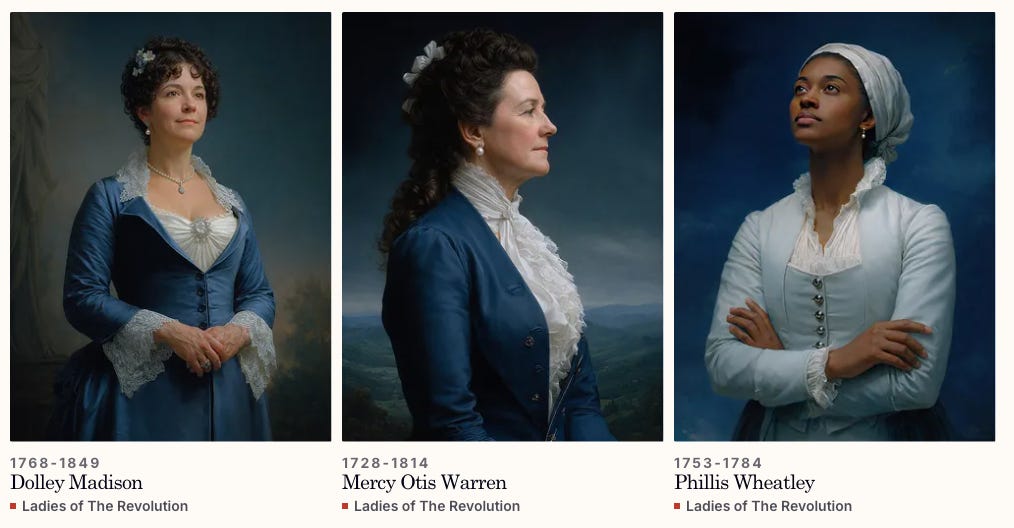
There are four women on the list – Poet Phillis Wheatley, who is the only non-white person represented; writer Mercy Otis Warren; First Lady Dolley Madison, and Abigail Adams.
It was Abigail who sent me over the edge.
Adams was the wife of President John Adams and despite having no formal education, she was his intellectual equal and closest political advisor. She ultimately left more than 1,000 pieces of correspondence with her husband that are thought to be among the richest accounts of the new nation. She also opposed slavery and supported women’s rights in an era when such positions were nearly unspeakable for someone in her position.
Two portraits of Adams exist that were painted from real life – one when she was 21 years old, and one from much later in her life. They give us a sense of what she might have looked like, dark-eyed and dark-haired with a long nose, but neither of them indicate that she looked anything like this:
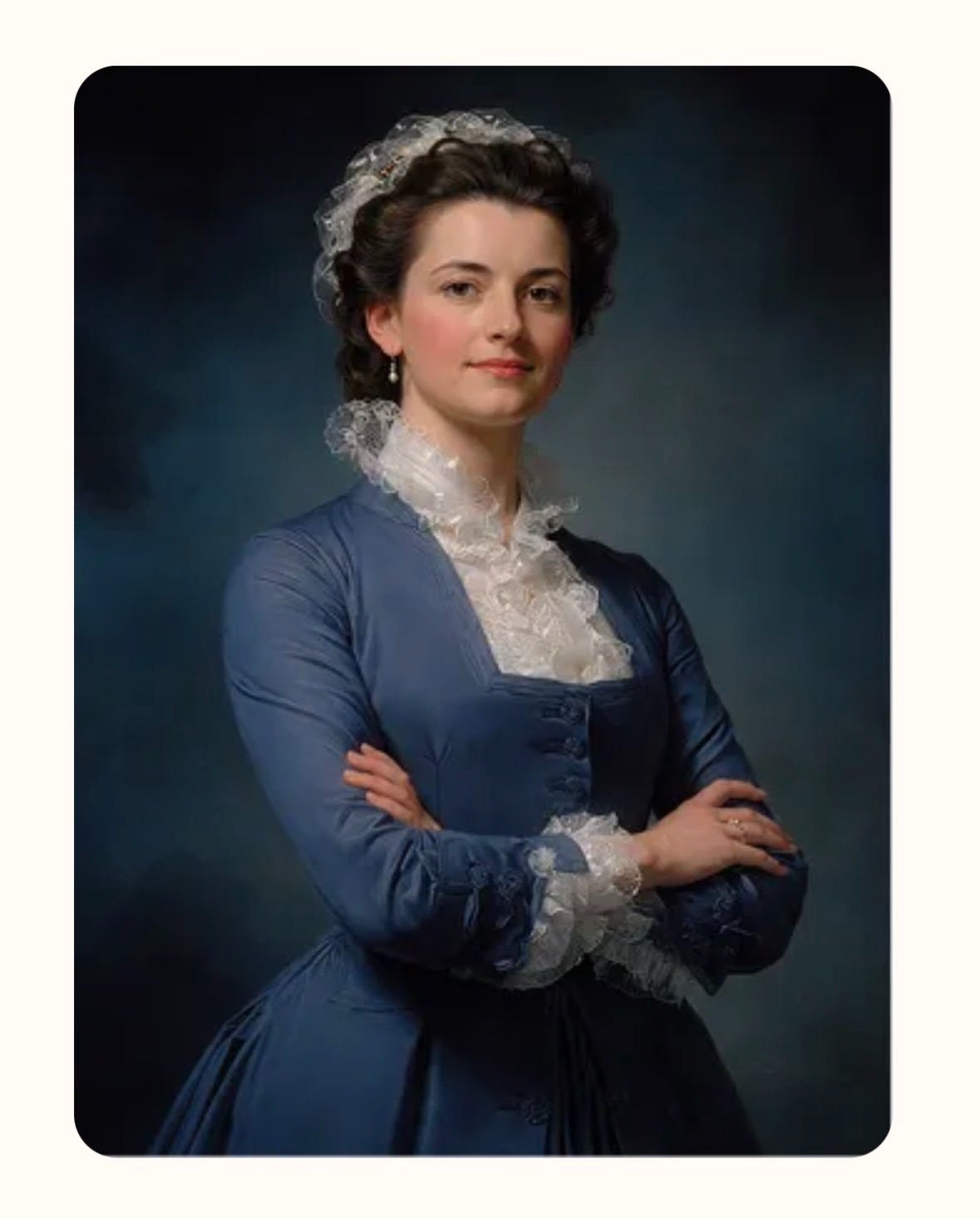
There is a lot to say here about women – even, and maybe especially, famous women – always needing to look pretty, passive, and pleasant. But the First Lady was neither a milkmaid nor a Disney princess, and no portrait of her ever existed that shows her in this pose, or in this BBC period drama dress. It is entirely a fabrication – Abigail Adams flattened and simplified for a smooth-brained administration. Because why check the National Archives for something real when your computer friend can draw you a cute picture?
The other women’s portraits are not much better. Mercy Otis Warren wears a totally anachronistic dress and looks like she’s about to either go golfing with the Nixons in Palm Springs or get into an argument with Christine Baranski on The Gilded Age. There is only one extant engraving of Phillis Wheatley and its resemblance to her actual person is debated. So it’s curious that there is a complete illustration of her here, looking boldly – but not too boldly – toward the horizon. Dolley Madison, in a dress that belongs to no era of fashion that ever existed, is giving Joanne Worley.
I shouldn’t be surprised. In a moment when the current administration is asking national park sites to remove mentions of climate change, slavery, and civil rights; when public lands are under threat from mining and drilling; when the President orders the demolition of an entire wing of the White House and plans a white marble arch in his own honor, it’s all right on brand.
The name change from America 250 to Freedom 250 is apt, in a way. The President’s version of history is not to be confused with the real thing.
History is messy and complex. It requires the ability to grasp multiple ideas at once, some of them contradictory. The people in the portraits do not always look conveniently beautiful, and they certainly do not all look the same. History is alive and well in so many places across the US. You just have to know where to look – and in most cases, that means looking directly away from the man in the White House.

Renegade America 250
Forget the Liberty Bell. (Although admittedly, it’s kind of cool.) Below are sites that show many different, often complex perspectives on American history. More than a few of them have been challenged by the current administration – either through attempted censorship, funding cuts, or purposeful understaffing.
Visit these places and lend them your support. And if you have favorite historical sites or monuments, please share them in the comments!
It’s your America. Don’t let the bad guys have it.
Northeast and Washington, DC
Boston African American National Historic Site, Boston
A series of sites in the Beacon Hill neighborhood that tell the story of black life and resistance in 19th century Boston.
El Museo del Barrio, New York City, NY
Founded to preserve the culture and history of Puerto Rican and Latin American culture in the US.
Frances Perkins National Monument, Newcastle, ME
Family home and museum dedicated to the first women ever to serve in the US cabinet and a key architect of the New Deal.
Lowell National Historic Park, Lowell, MA
The history of the Industrial Revolution in the US, but also the birthplace of American labor movements.
Museum of the Chinese in America, New York City, NY
Situated in New York’s Chinatown and dedicated to the preservation of Chinese-American history and culture.
National Constitution Center, Philadelphia, PA
A nonpartisan museum and event space dedicated to civics education and debate.
National Immigration Museum at Ellis Island, New York City, NY
The spot where eight million immigrants first set foot in the United States.
National Museum of African American History and Culture, Washington, DC
The preeminent museum in the country of its kind, containing more than 45,000 artifacts.
National Museum of the American Indian, Washington, DC / New York City, NY
An expansive collection that’s at the forefront of the conversation about repatriation and ownership of native American artifacts.
Stonewall National Monument, New York City, NY
The first US national park site dedicated to LGBTQ+ history. It has been subject to censorship under the current administration.
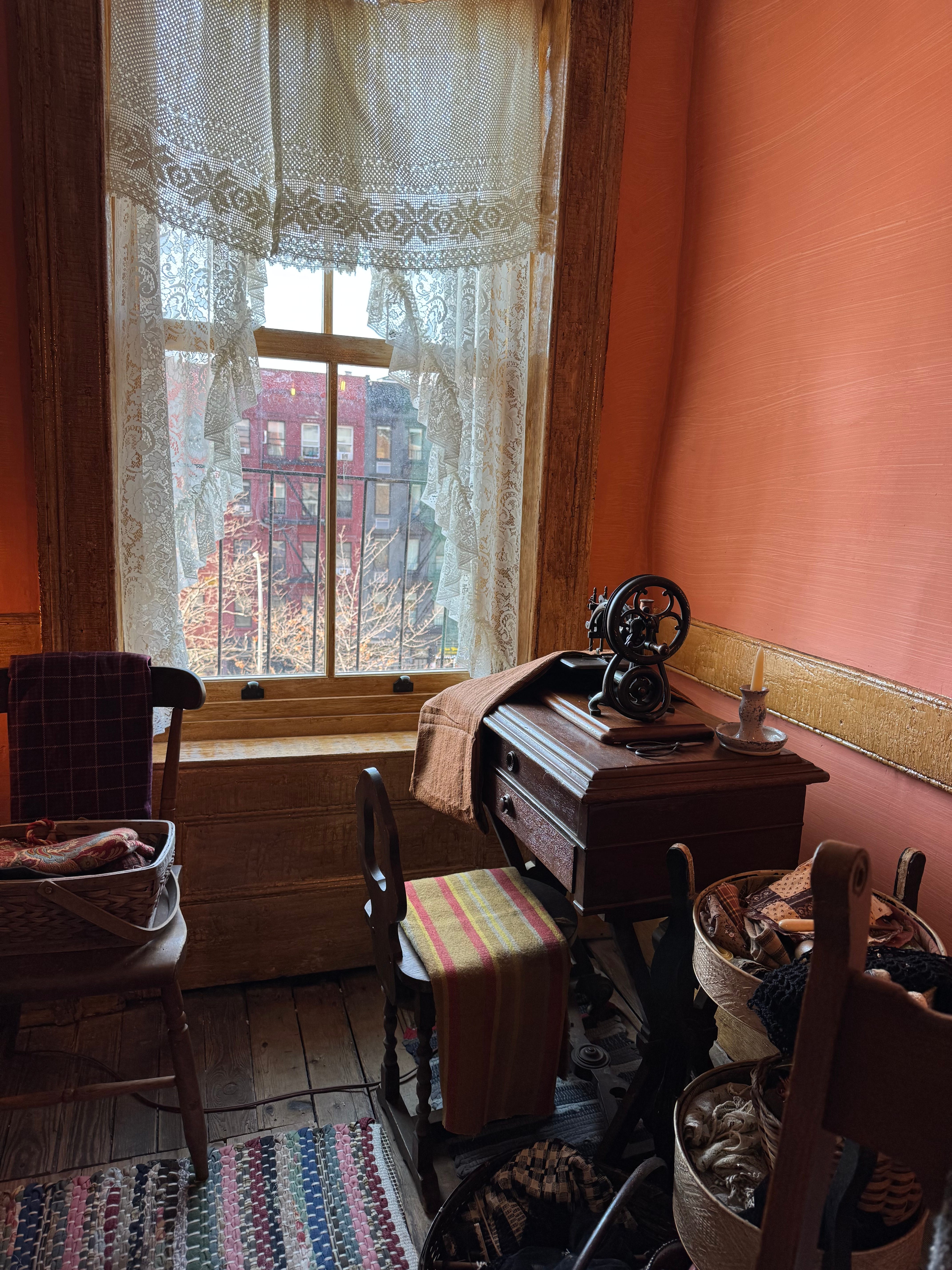
Tenement Museum, New York City, NY
Reconstructed apartments in a historic tenement building bring the lives of New York’s immigrant communities to life.
Women’s Rights National Historical Park, Seneca Falls, NY
Home of the first ever US women’s rights convention in 1848.
South
Dry Tortugas National Park, Florida
The southernmost national park in the US where scientists are racing to save and restore coral reefs that have been severely damaged by climate-change-driven ocean warming.
Maggie L. Walker National Historic Site, Richmond, VA
Restored home of the businesswoman and activist who would become the first African American bank president.
National Center for Civil and Human Rights, Atlanta, GA
Dedicated to the cause of human rights for all, including an initiative focusing on untold stories of racial violence and systemic exclusion.
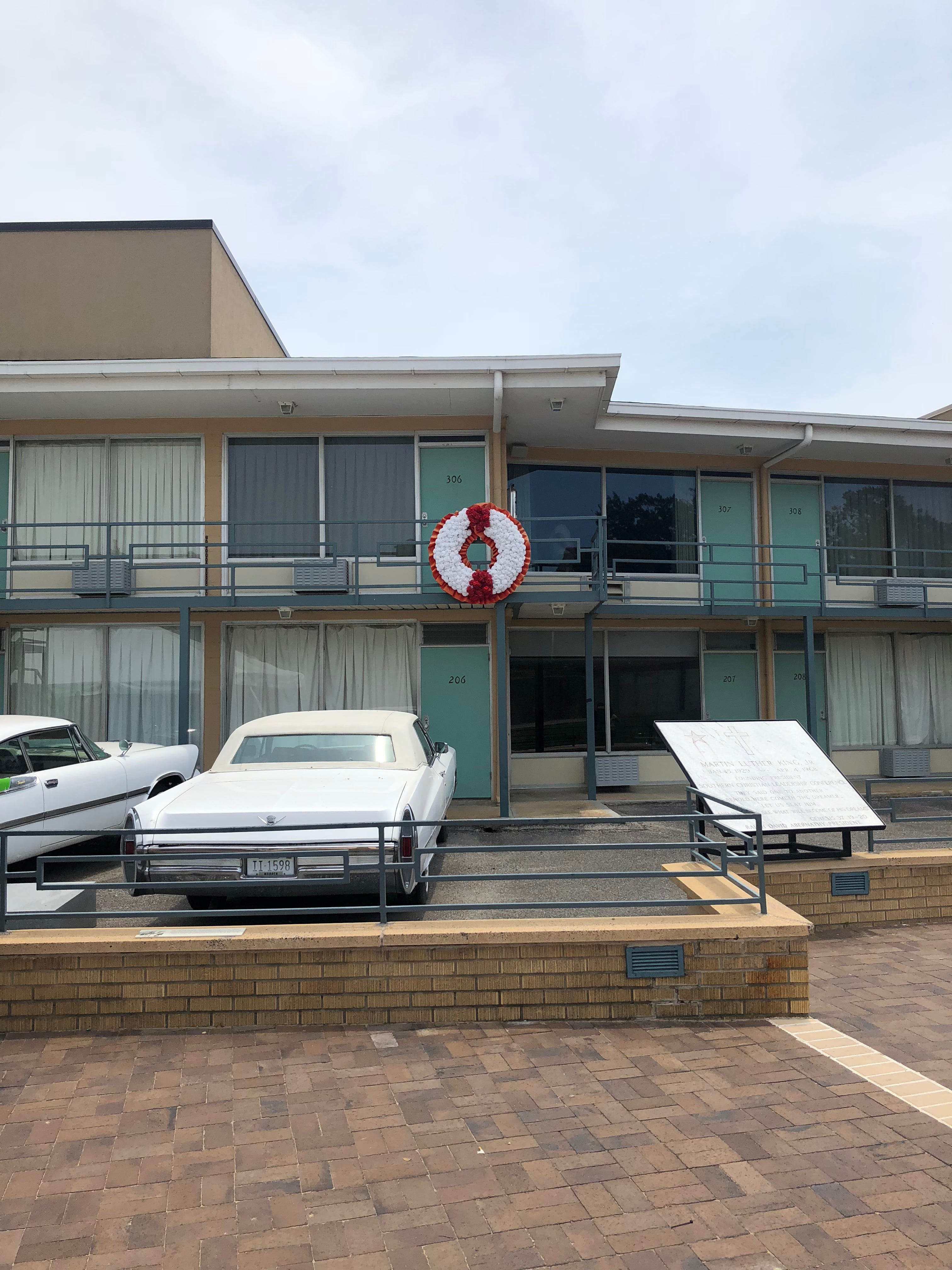
National Civil Rights Memorial, Memphis, TN
Museum and memorial built into the former Lorraine Motel where Dr. Martin Luther King, Jr. was assassinated. A portion of the museum examines the assassination in painstaking detail.
National Memorial for Peace and Justice, Montgomery, AL
History museum and monumental sculpture honoring the victims of racial terror lynchings.
Southern Food and Beverage Museum, New Orleans, LA
A look at how cuisines, specific dishes, and drinks evolved across the Southern US.
Whitney Plantation, Wallace, LA
One of the few plantation museums that centers the story of human enslavement.
Midwest
Arab American National Museum, Dearborn, MI
The first museum in the US dedicated to telling the Arab-American story, and the only one actively collecting art by Arab-American artists.
Cahokia Mounds State Historic Park, Illinois
A UNESCO World Heritage Site, this was once the site of a pre-Colombian city (circa 1100) that spread over more than 4,000 acres and had a population of 20,000 – more than London at the time.
Hopewell Culture National Historic Park, Ohio
Please don’t let anyone ever tell you that the US is a “new” country. These enormous mounds were used by the Hopewell cultures of the Midwest, which ran from Wisconsin to Florida, more than 2,000 years ago.
National Underground Railroad Freedom Center, Cincinnati, OH
Located on the Ohio River, the boundary that divided slave and free states in the Civil War, the museum is dedicated to the cause of inclusive freedom.
Negro Leagues Baseball Museum, Kansas City, MO
The only museum of its kind honoring and celebrating the heroes of the Negro Leagues.
Voyageurs National Park and the Boundary Waters Canoe Area Wilderness, Minnesota
A sprawling area of pristine rivers and lakes across the northernmost part of the state. Under constant ecological and political pressure from private mining interests upstream.
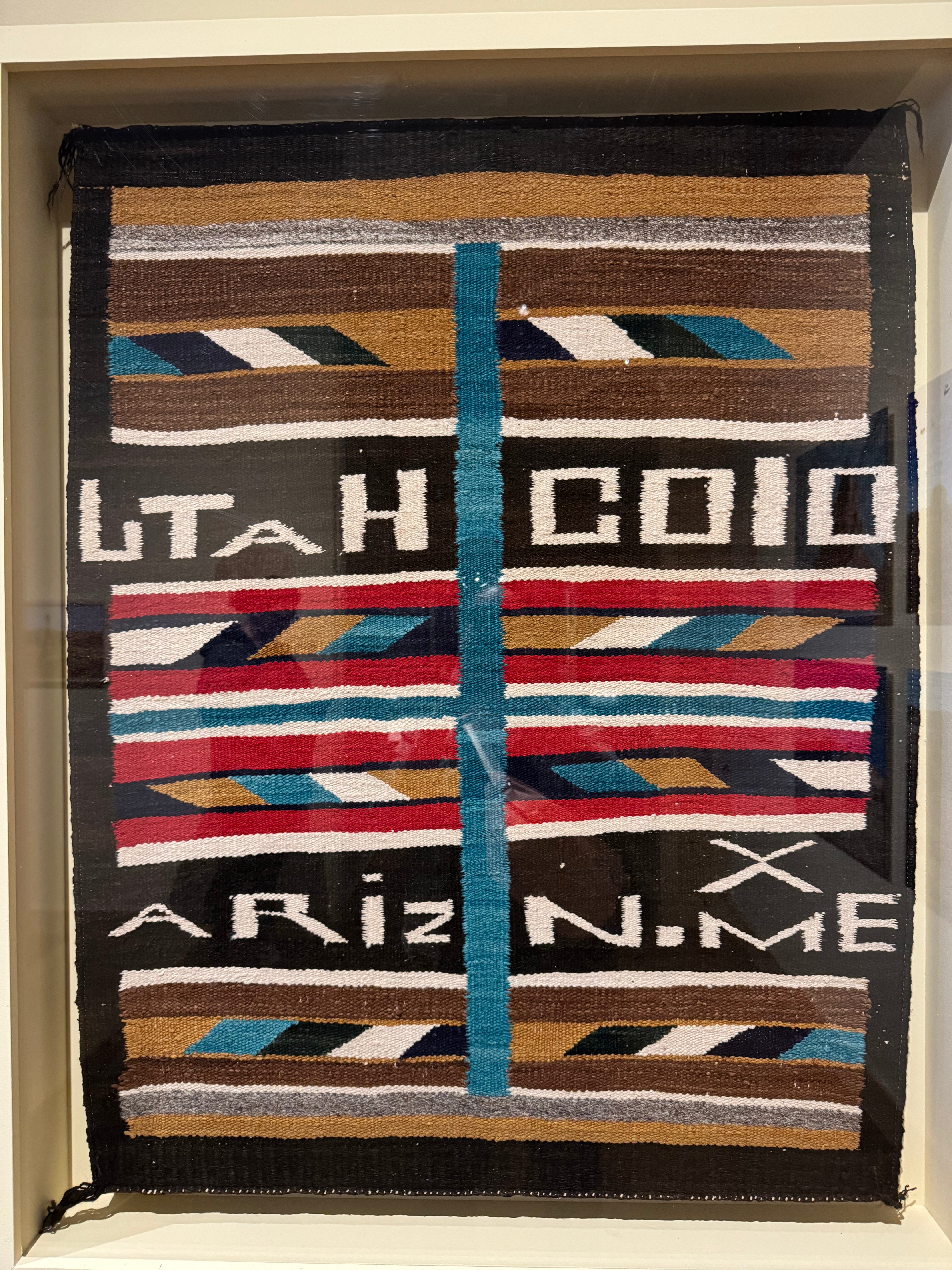
West and Pacific Northwest
Bears Ears National Monument, San Juan County, UT
Among the most contested preservation lands in the US, this national monument was the first created through public-private partnership with local tribes.
Biosphere 2, Oracle, Arizona
A research facility, sort of like a big green house, run by the University of Arizona where scientists study climate and ecosystems.
Chaco Culture National Historic Park, New Mexico
The home of the ancestral Pueblo peoples from 850 to 1250, this complex of stone buildings is one of the most important pre-Colombian sites in the Americas.
Glacier National Park, Montana
The most endangered of the US national parks, global warming is driving the melting of its famous glaciers. Preservation efforts include ecosystem protection and carbon footprint reduction.
Hibulb Cultural Center and Natural History Preserve, Tulalip, Washington
A cultural center dedicated to the culture of the Tulalip tribes of the Pacific Northwest, it’s surrounded by 50 acres of forests and wetlands.
Museum of Indian Arts and Culture, Santa Fe, New Mexico
With collections of pottery, textiles, and everyday objects, this museum frames its exhibits from the native perspective.
California, Hawai’i, and Alaska
Alaska Native Heritage Center, Anchorage, AK
The museum includes six reconstructed native dwellings in a wooded area around the museum that visitors can enter.
Bishop Museum, Honolulu, HI
With exhibits, performances, and classes, this Hawaiian cultural museum is also home to collections you’d typically find in a natural history museum – all from the state of Hawai’i.
California Science Center, Los Angeles, CA
This world-class science museum is slated to become the permanent home of the space shuttle Endeavour. The (literally) sparkling new gallery built for the shuttle is slated to open this year.
GLBT Historical Society, San Francisco, CA
Chronicles the history of LGBTQ+ culture and houses the largest document archive on the subject in the world.
Manzanar National Historic Site, Lone Pine, CA
One of several historic sites in the US where Japanese and Japanese-American citizens were confined during World War II.
Museum of Social Justice, Los Angeles, CA
Looks at the history of social change in Los Angeles and beyond.
Rosie the Riveter WWII Home Front National Historical Park, San Francisco, CA
A museum and historic site that focuses on women during World War II, including their entrance into the workforce and efforts to help the cause.